In Nigeria today, buying spare parts is no longer just about knowing where to buy—it’s about knowing how not to be deceived.
One uncomfortable truth many car owners are only beginning to realize is this:
fake or refurbished spare parts now compete directly with durable ones—and are often deliberately priced high to appear original.
Yes, expensive no longer means authentic.
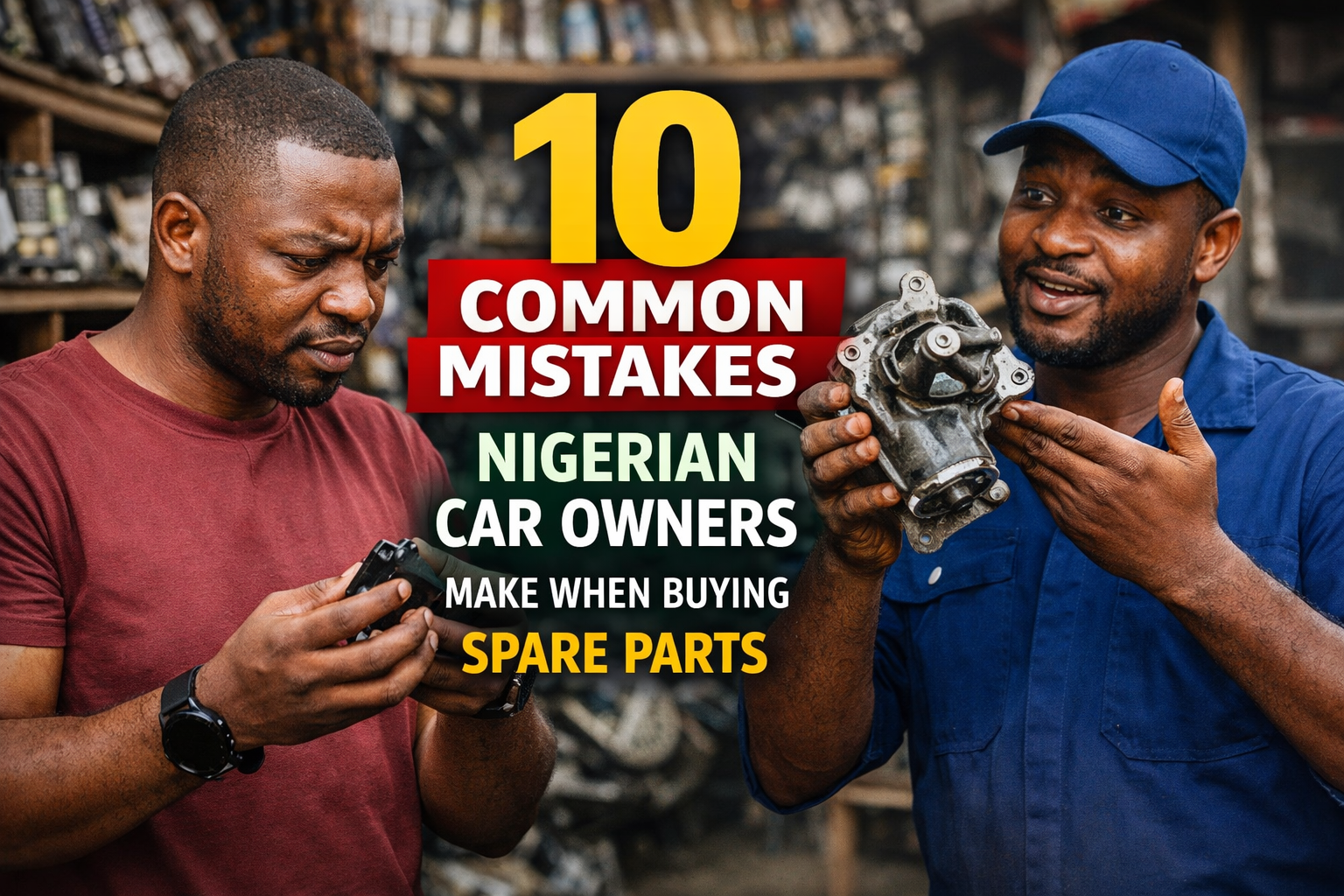
In this post, we’ll expose the 10 most common mistakes Nigerian car owners make when buying spare parts, why they happen, and how smart car owners are learning to protect themselves.
1. Believing High Price Automatically Means Original
This is the biggest and most dangerous mistake.
In today’s Nigerian spare-parts market:
- Some fake or refurbished parts are intentionally overpriced
- Dealers know many buyers equate high price with originality
- Inflation is now used as a tool of deception
Reality check:
Price is no longer proof of quality.
What to do instead:
Rely on verification, part numbers, and comparison, not price tags.
2. Buying Spare Parts Without Confirming Exact Compatibility
“Toyota is Toyota” has damaged many vehicles.
Mistakes here include:
- Ignoring engine variants
- Mixing production years
- Assuming similar-looking parts are interchangeable
A part that fits a 2008 model may damage a 2014 version.
What to do instead:
Always confirm:
- Exact model
- Year of manufacture
- Engine type
Precision matters.
3. Trusting Verbal Assurances From Sellers
Statements like:
- “Na original, boss”
- “I swear, this one strong”
…are not verification.
What to do instead:
- Ask for OEM or manufacturer part numbers
- Inspect packaging carefully
- Cross-check information independently
Confidence is cheap. Evidence is not.
4. Ignoring OEM / Manufacturer Part Numbers
OEM part numbers exist to eliminate guesswork.
When you skip them:
- You lose your strongest verification tool
- You depend fully on the seller’s honesty
- You increase your risk of buying wrong or fake parts
What to do instead:
Always identify the correct OEM number before buying—online tools make this easier than ever.
5. Buying From Sellers With No Traceability
Anyone can claim originality.
Not everyone can be held accountable.
Red flags:
- No specialization
- No fixed location
- No reputation to protect
What to do instead:
Buy from sellers who:
- Focus on specific brands
- Have traceable business presence
- Are known within the ecosystem
6. Paying Before Proper Inspection
Inspection after payment is regret waiting to happen.
Common problems discovered too late:
- Repackaged fakes
- Used parts sold as new
- Missing accessories
What to do instead:
Inspect before payment:
- Packaging seals
- Serial numbers
- Physical condition
Once payment is made, your negotiating power disappears.
7. Buying Parts Before Confirming the Actual Fault
Many car owners replace parts based on assumptions.
Result?
- Perfectly good parts removed
- Money wasted
- Real problem still unsolved
What to do instead:
Confirm diagnosis with a competent mechanic before buying anything.
8. Confusing “Foreign Used” With “Durable”
Foreign-used does not mean original—and it definitely doesn’t mean long-lasting.
Some foreign-used parts:
- Are near end-of-life
- Were removed from accident vehicles
- Only look good
What to do instead:
Understand the trade-off and decide consciously—not emotionally.
9. Falling for Fake Branding and Sophisticated Packaging
Fake parts have evolved.
They now copy:
- Holograms
- Fonts
- Brand colors
- Security stickers
What to do instead:
Compare across multiple sources and don’t rely on packaging alone.
10. Not Using Technology to Verify and Compare
This is the modern mistake that costs the most.
Relying solely on:
- Market noise
- One seller’s word
- Urgency and fear
…is no longer smart.
What to do instead:
Use technology that helps you:
- Compare parts across sellers
- Verify information
- Reduce guesswork and fraud
The New Rule Every Nigerian Car Owner Must Learn
High price is not proof.
Verification is.
The spare-parts market may be tough, but informed car owners are far harder to cheat.
Call to Action
Stop trusting price. Start verifying.
With Autolabari AI Search, you can:
- Search for the correct spare part for your car
- Compare availability across trusted sellers
- Make smarter, safer buying decisions—before paying
Verify before you buy.
Drive with confidence.
Trust Autolabari Auto Hub.