
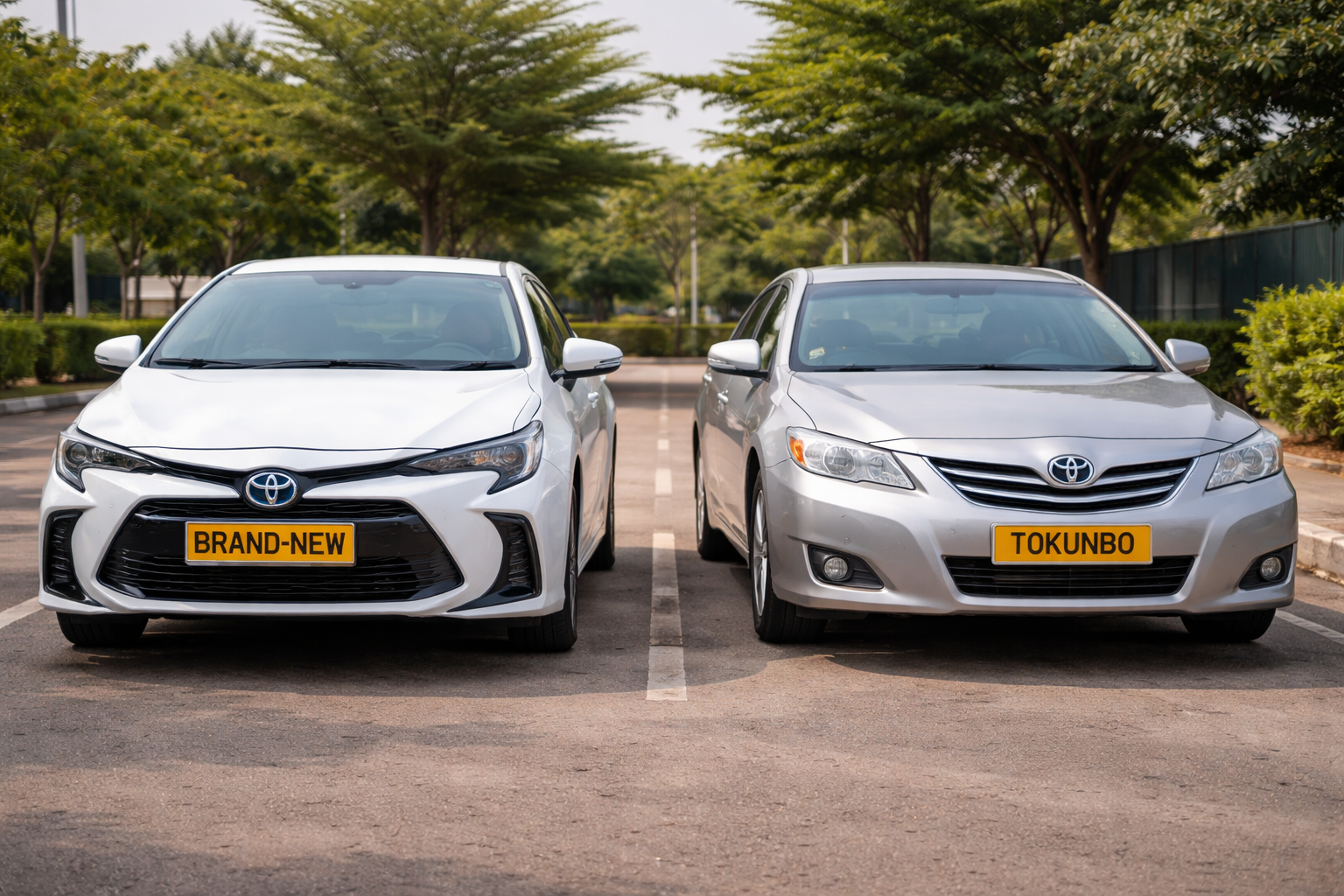
Buying a car in Nigeria is no longer just a lifestyle choice—it’s a serious financial strategy. With exchange rates, import duties, fuel costs, and maintenance expenses constantly shifting, choosing between a Tokunbo (imported used) car and a brand-new one can either protect your finances or quietly drain them.
So in 2026 Nigeria, which option actually makes financial sense?
Let’s break it down—without assumptions, without hype, and without outdated price figures.
1. Upfront Cost: The Reality of Today’s Prices
🚗 Brand-New Cars (Popular Brands)
In today’s Nigerian market, brand-new cars from popular manufacturers like Toyota, Honda, Hyundai, Kia, and Nissan are not cheap.
Realistic price ranges (2025–2026):
- Entry-level economy models (small cars, basic trims):
₦12m – ₦20m - Popular mainstream sedans & compact SUVs (Corolla, Civic, Elantra, etc.):
₦20m – ₦40m+ - Mid-size SUVs & higher trims:
₦45m – ₦70m+
Anything advertised as “brand new” far below these ranges usually comes with compromises—very basic trims, limited support, or less mainstream brands.
🚙 Tokunbo (Imported Used Cars)
Tokunbo cars still offer a lower entry point, but the era of “clean Tokunbo for ₦3m” is long gone.
Realistic Tokunbo ranges:
- Older models (early–mid 2000s):
₦7m – ₦10m - Mid-range used (2010–2014):
₦10m – ₦15m - Newer Tokunbo (2015–2019):
₦15m – ₦22m+
Below ₦7m, buyers should expect:
- Very old models
- High mileage
- Accident history or heavy repairs
Tokunbo is cheaper—but not “cheap” anymore.
2. Depreciation: Where the Money Quietly Disappears
This is where brand-new cars hurt the most financially.
- New cars typically lose 20–25% of their value in the first year.
- After that, depreciation continues at about 10–15% per year.
Tokunbo cars, on the other hand:
- Have already absorbed most of the heavy depreciation
- Lose value more gradually, especially if well maintained
Financial insight:
If you plan to sell your car within 3–5 years, Tokunbo cars often preserve value better relative to purchase price.
3. Maintenance & Reliability: Peace of Mind vs Probability
✅ Brand-New Cars
Pros:
- Manufacturer warranty (3–5 years)
- Minimal repairs in early years
- Predictable servicing costs
Cons:
- Repairs after warranty can be expensive
- Spare parts for newer models may be costly or scarce initially
⚠️ Tokunbo Cars
Pros:
- Lower purchase cost
- Widely available spare parts for popular models
Cons:
- Unknown driving and maintenance history
- Higher chance of unexpected repairs
- Quality depends heavily on inspection
Key truth:
A badly chosen Tokunbo car can erase its “cheap” advantage in one year of repairs.
That’s why inspection and verification matter more than price—and where platforms like Autolabari Auto Hub become critical.
4. Fuel Economy & Daily Running Costs
Newer cars are generally more fuel-efficient due to:
- Improved engine technology
- Better transmission systems
- Lighter materials
Example (realistic Nigerian usage):
- Older Tokunbo sedan: ~11–12 km/l
- Newer model: ~15–17 km/l
Over 12 months of daily commuting, that difference can mean hundreds of thousands of naira saved—especially with fuel price volatility.
5. Insurance, Registration & Compliance
- Brand-new cars attract higher insurance premiums (3–6% of car value annually)
- Tokunbo cars are cheaper to insure but may not qualify easily for comprehensive cover
Registration and documentation are usually smoother for new cars, while Tokunbo vehicles may require extra verification—especially if documentation is incomplete.
6. Resale Value & Exit Strategy
Think beyond buying—how will you exit?
- Brand-new cars lose value faster in the first few years
- Tokunbo cars often resell faster if priced correctly
- Popular models (Toyota, Honda) always have better resale demand
If resale matters to you, Tokunbo often offers better flexibility.
✅ So… Which One Makes Financial Sense in Nigeria?
Tokunbo Makes Sense If:
- Your budget is below ₦20m
- You plan to resell in 3–5 years
- You can inspect properly or use a trusted platform
- You prioritize value over warranty
Brand-New Makes Sense If:
- You can comfortably afford ₦25m+
- You want predictability and warranty protection
- You plan long-term ownership (7–10 years)
- You prefer minimal early maintenance stress
The Autolabari Perspective
The smartest car buyers in Nigeria don’t ask:
“Is Tokunbo bad?” or “Is new better?”
They ask:
“Which option costs me less over time?”
That’s why Autolabari Auto Hub focuses on:
- Helping buyers verify cars before purchase
- Connecting owners to trusted service providers
- Reducing hidden costs that destroy financial plans
Final Thought
In 2026 Nigeria, Tokunbo cars still make financial sense for most buyers—but only when bought intelligently. Brand-new cars offer comfort and peace of mind, but at a premium that not everyone needs to pay.
The real danger isn’t Tokunbo or brand-new.
It’s buying blind.