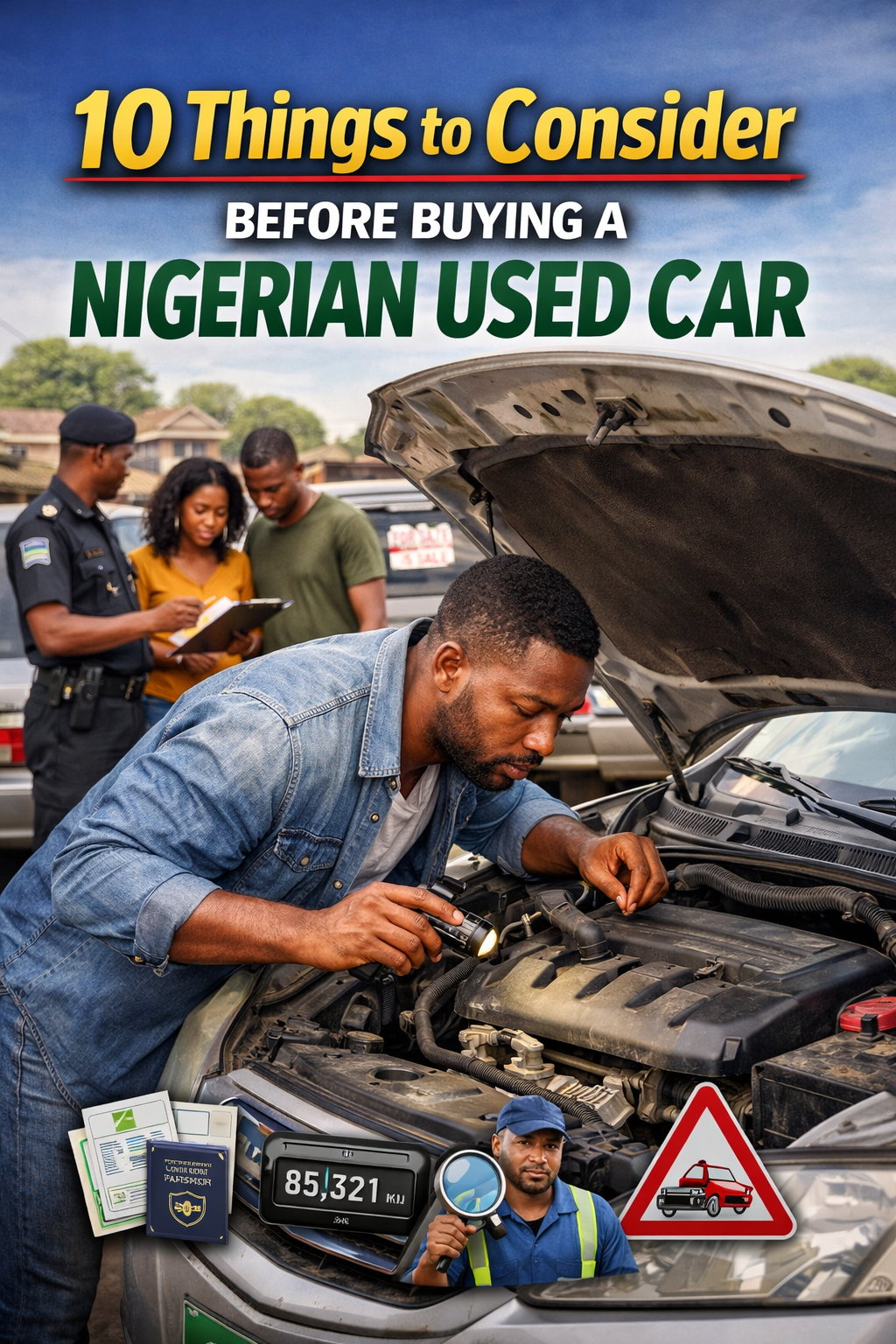
In Nigeria, buying a used car—popularly called Nigerian Used—is often a financial decision, not an emotional one. With rising vehicle import duties, foreign exchange pressure, and limited access to brand-new cars, over 85% of vehicles on Nigerian roads are pre-owned, according to industry estimates by the National Automotive Design and Development Council (NADDC).
However, the Nigerian used car market is also one of the most unregulated and risk-prone if buyers fail to do due diligence.
Before you part with your hard-earned money, here are 10 critical things every Nigerian car buyer must consider.
1. Vehicle Documents and Legal Status
The very first thing to confirm is ownership legitimacy.
Ensure the car has:
- Original vehicle license
- Proof of ownership
- Valid insurance
- Roadworthiness certificate
- Customs clearance (for imported vehicles)
According to the Nigeria Police Force Vehicle Identification Unit, a significant number of seized vehicles yearly are linked to document irregularities or VIN manipulation.
Professional tip: Always cross-check the chassis (VIN) number physically on the car and on all documents.
2. Nigerian Road Compatibility
Not every car suits Nigerian roads—especially outside major cities.
Key considerations:
- Ground clearance
- Suspension strength
- Availability of replacement parts
This is why models like Toyota Corolla, Camry, Hilux, Honda Accord, and Lexus RX dominate Nigerian roads—they are proven survivors.
A study by PwC Nigeria (Automotive Industry Report) highlights that durability and maintenance cost rank higher than aesthetics for Nigerian buyers.
3. Engine Condition (More Important Than Body)
A shiny body can hide a dying engine.
Check for:
- Engine knocking sounds
- Smoke from exhaust
- Oil leaks
- Overheating signs
Engine replacement costs in Nigeria can range from ₦800,000 to over ₦4 million, depending on the model and availability.
Industry truth: In Nigeria, engine health determines car value more than year or mileage.
4. Transmission Health (Automatic ≠ Safe)
Automatic transmissions dominate Nigerian used cars—but they also fail silently.
During inspection:
- Check gear response time
- Feel for jerking or slipping
- Test on inclines and traffic stops
Transmission repairs are among the top 3 most expensive automotive fixes in Nigeria, according to independent workshop surveys in Lagos and Abuja.
5. Maintenance History (Or Lack of It)
Many Nigerian used cars have no documented service history.
Ask:
- Where was it serviced?
- Was the oil changed regularly?
- Has the engine or gearbox been opened before?
Cars with consistent maintenance—even if older—often outperform newer but neglected vehicles.
6. Odometer Credibility
Odometer rollback is a known issue in the Nigerian used car space.
According to automotive inspection firms operating in Nigeria, 1 in 3 used cars inspected show signs of mileage inconsistency.
Compare:
- Mileage vs seat wear
- Pedal condition
- Steering wheel wear
If it doesn’t add up, trust your instincts.
7. Accident and Flood Damage Checks
Flood-damaged vehicles—especially imports—are increasingly entering Nigeria.
Warning signs include:
- Damp or musty interior smell
- Electrical malfunctions
- Rust under seats or dashboard
Flood-damaged cars often develop long-term electrical failures, which are costly and frustrating to fix.
8. Electrical and Air Conditioning Systems
In Nigeria’s climate, a functional AC is not luxury—it’s survival.
Test:
- Cooling strength
- Compressor noise
- All dashboard electronics
- Power windows and sensors
Electrical faults are common in poorly repaired accident vehicles.
9. Spare Parts Availability and Cost
Before buying, ask yourself:
“If this part fails tomorrow, can I find it easily?”
Some imported brands have limited local support, leading to:
- Long repair delays
- Expensive imported parts
- Dependency on roadside improvisation
This is why mainstream Japanese brands continue to dominate Nigeria’s used car market.
10. Professional Inspection Before Payment
Never rely solely on the seller’s word.
Independent inspections reduce risk by identifying:
- Hidden mechanical issues
- Structural damage
- Estimated repair costs
According to Nigerian automotive service providers, buyers who conduct inspections save an average of 20–30% of post-purchase repair expenses.
Final Thought: Buy with Information, Not Emotion
A Nigerian used car can be a smart investment or a financial trap—the difference lies in what you check before buying.
At Autolabari Auto Hub, we advocate informed car ownership, connecting buyers with verified inspection services, trusted dealers, and expert guidance—so you don’t learn expensive lessons the hard way.
Smart buyers don’t rush. They research.
References
- National Automotive Design and Development Council (NADDC) – Automotive Market Data
- PwC Nigeria – Automotive Industry Reports
- Nigeria Police Force Vehicle Identification Unit
- Independent Automotive Workshop Surveys (Lagos & Abuja)
- Nigerian Automotive Inspection Service Providers